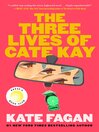
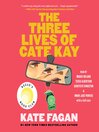
The three lives of Cate Kay

Kate Fagan

Book - 2025

"Cate Kay knows how to craft a story. As the creator of a bestselling book trilogy that struck box office gold as a film series, she's one of the most successful authors of her generation. The thing is, Cate Kay doesn't really exist. She's never attended author events or granted any interviews. Her real identity had been a closely guarded secret, until now. As a young adult, she and her best friend Amanda dreamed of escaping their difficult homes and moving to California to become movie stars. But the day before their grand adventure, a tragedy shattered their dreams and Cate has been on the run ever since, taking on different names and charting a new future. But after a shocking revelation, Cate understands that returni...ng home is the only way she'll be a whole person again"--Amazon.com.

Saved in:

Bookmobile Fiction Show me where

FICTION/Fagan Kate
0 / 1 copies available

1st Floor Show me where

FICTION/Fagan Kate
2 / 4 copies available
Location Call Number   Status
Bookmobile Fiction FICTION/Fagan Kate Bookmobile Storage
1st Floor FICTION/Fagan Kate Due Apr 9, 2026
1st Floor FICTION/Fagan Kate Due Mar 31, 2026
1st Floor FICTION/Fagan Kate Checked In
Subjects
Genres
Novels
Published
New York, NY : Atria Books 2025.
Language
English
Main Author
Kate Fagan (author)
Edition
First Atria Books hardcover edition
Item Description
"Reese's Book Club"--Cover.
Physical Description
294 pages ; 24 cm
ISBN
9781668076217
Contents unavailable.
Review by Booklist Review

Celebrated author Cate Kay has secrets. First, her name isn't really Cate Kay. The Three Lives of Cate Kay is framed as her memoir, with added chapters from other characters that present the whole story. In her childhood, Cate had an intense friendship with Amanda and plans to make it big in Hollywood together, plans that were complicated by the fact that Cate is gay and was not-so-secretly attracted to Amanda. After Cate leaves her hometown on her own, her life becomes entangled with a lawyer and then a closeted actress on the verge of a breakthrough. Centering on the experience of this small-town girl with burning ambitions, the book is exquisitely plotted with its inventive story structure, placing nuggets of information throughout to reel the reader in. Though the pace is leisurely, the tension of the story is taut and explores how ambitions clash with genuine connection and test the humanity of compassionate relationships. It is intimate and personal and digs into the often-opaque motivations of its characters. At its heart, it is about how we deal--or don't deal--when tragedy strikes. Fagan's (All the Colors Came Out, 2021) journalism-honed observational skills make her fiction debut shine.

From Booklist, Copyright (c) American Library Association. Used with permission.
Review by Publisher's Weekly Review

Sportswriter Fagan (What Made Maddy Run) makes her fiction debut with the electrifying story of a bestselling author's secrets. Many have read The Very Last, but few know the identity of its pseudonymous author, Cate Kay. The narrative, framed as Kay's unpublished memoir, gradually unravels her true story. Raised as Annie Callahan in Upstate New York, she now lives in Charleston, S.C., under the name Cass Ford. When she was a teen, her friend Amanda fell from a zip line while trying to impress her. The accident prompts Annie to run away without knowing whether Amanda survived. She drives aimlessly north and winds up in Plattsburgh, N.Y., where she lives out of her car and works in a coffee shop, afraid to face Amanda and relishing her newfound identity under the name Cass. Eventually, she meets Sidney, a law student who encourages her writing and helps her understand her queer identity. She catapults to fame with the pseudonym Cate Kay and continues to shed her past, leaving Sidney for movie star Ryan Channing, who's secretly a lesbian, after Ryan is cast in a film adaptation of The Very Last. Fagan fascinates with her enigmatic and shape-shifting protagonist, and the tightly woven plot will keep readers on the edge of their seats. It's a blast. Agent: Katie Greenstreet, Paper Literary. (Jan.)

(c) Copyright PWxyz, LLC. All rights reserved
Review by Kirkus Book Review

When a young woman writes a trilogy of bestselling books under a pen name, everyone wants to know her identity, but she has reasons for keeping herself hidden. The reclusive author Cate Kay is legally named Cass Ford, but she was born Anne Marie Callahan--and to her best childhood friend, she was always known as Annie. Growing up in upstate New York, Annie and Amanda did everything together. They especially loved to act, and they shared big dreams of running off to Los Angeles. Although Annie's love for Amanda wasn't entirely platonic, their attachment ran deep enough to survive their mismatched feelings. What their relationship was less able to survive was an unexpected accident. Annie ended up leaving town alone and creating a new life for herself. Dismayed by her cowardice in leaving Amanda behind, she takes on a new identity as Cass Ford and falls into a relationship with Sidney, a woman who seeks to isolate and control her. When Cass writes a runaway hit, Sidney--who's one of the few people privy to her real identity--doesn't want to share that information, or any other part of Cass, with the world. As Cass navigates her new success, she begins to wonder whether she ever really knew who she was and what she should do now that she has the power to choose. The story is presented as Cate Kay's memoir and sprinkled with her own footnotes, but it also offers brief chapters from the first-person viewpoints of many other characters, implying that Cass has reached out to them for their perspectives. Through this documentary-like setup, author Fagan is able to round out the picture of Annie/Cass/Cate and the way she's coped with various traumas. Though the characters are multidimensional and compelling, some of their actions are a bit hard to believe, like the way Annie abandoned her best friend in a moment of need and later accepted tragic news without any sort of verification. Similarly, there are times where the narrative is weighed down with irrelevant details. Even so, Fagan explores many complex topics with grace, ranging from toxic friendships to uncomfortable professional successes and undeserved second chances. A smart and enticing fictional memoir. Copyright (c) Kirkus Reviews, used with permission.

Copyright (c) Kirkus Reviews, used with permission.

Chapter 1: Anne Marie Callahan CHAPTER 1 ANNE MARIE CALLAHAN 1991 Bolton Landing My earliest memory is wearing my favorite shirt for an entire month of summer without my mom noticing. I was going into fourth grade and my mom figured since I was now in the public school system, she could leave me alone if needed. There was even a socially acceptable term for it--a latchkey kid. We lived in an apartment building that was once a motel. The kitchen consisted of a toaster oven and microwave, and Mom worked cleaning rooms at the Chateau, this fancy resort on the shore of Lake George. This was upstate New York, very upstate, with a complicated mix of blue-collar locals and vacationing urban elite. My mom and I, as you've probably guessed, were the former. My mom had lots of formers. Former jobs, former friends, former boyfriends, a former husband, who was also my dad but had never been anything of the kind. Apparently, he'd wanted to make her an honest woman (eye roll), but then a few months after I was born decided he didn't want honesty that bad. The shirt, my Tom and Jerry shirt, was white with a cartoon graphic on the front. I loved it. It fit so perfectly that I forgot I was wearing it, which was all I wanted from clothing--for it to disappear. When I wore other shirts, I was always tugging and rearranging, but not this one. Plus, I was wearing it the day this story started--the day I caught the sickness of wanting to eat the world. It was a summer day, so hot, humid. I was bored, and movement combated the languor of those endless afternoons, so I flipped the kickstand on my bike and pedaled to town, which was overrun with vacationers, as I knew it would be. Even as a kid I could spot city money. It was the way they held their car keys, like they were a sexy prop, and how they tenderly touched the edges of their sunglasses. I'd sit on the bench outside the ice cream shop and watch. That afternoon, the sky was mostly a crisp blue with an occasional fluffy white cloud. Like I imagine wallpaper of the sky would look. I was sitting on my bench when I looked up into an aqua sea. I visualized myself piercing through the blue, then through the ozone into outer space, then I imagined piercing outer space into--what? The thought triggered a moment of pure derealization--that's what I might call it now--and my body filled with this odd sensation of the universe is all there is; there's nothing outside the universe. This wasn't a feeling of atheism; it wasn't about heaven; the closest descriptor is uncanny, if uncanny was on steroids. I sat on the bench, unmoving, until the feeling disappeared, which didn't take long. It's not a feeling you can hold on to, nor one you can forget. When I rode home that afternoon, it felt like I'd swallowed a black hole and it demanded filling, somehow. My mom came home late that night. I was in my creaky twin bed beneath the window, wide-awake. I'd been listening intently for her while watching the raindrops on the glass; the beads of liquid kept merging before I was prepared to lose them. I heard shoes on gravel, always the first sound of my mom's return. Then, a few seconds later, her key in the door, a slow turn because she thought I was already asleep--that is, if she was thinking about me at all, which she probably wasn't. As she was hanging her bag, I said, Hi Mom . I wanted her to know I was still awake. Maybe she'd consider feeling badly that I'd been alone for so long in the dark, desperately needing a hug. "Oh, hi, honey," she said sweetly, which is how I knew she'd stopped for many glasses of white wine at the bar on her walk home. Her keys hit the counter, then she came to my bed and kneeled, wrapping her arms around me. I melted, forgetting for a moment the untethering of the day, swimming happily in her warmth. She was beautiful. Light brown hair and a long neck, high cheekbones, her sly smile. People said we looked alike, which thrilled and terrified me; I watched how men looked at her--like they were hungry. When she hugged me, I forgot everything else and briefly lived in an alternate universe: safety, love, time--so much time together. But most of all, I enjoyed the feeling that I mattered to her, that she'd choose me before anything else. Abruptly, she pulled back, but kept her hands on my shoulders. She narrowed her eyes, sniffed. "How many days in a row have you been wearing this shirt?" She began aggressively and clumsily tugging the shirt over my head. The warm moment I'd been living inside imploded. Most of my childhood memories are hazy--the consistency of dreams. Except this one. This one stuns me with its vividness: the colors of my Tom and Jerry shirt; the wallpaper sky before the universe rewired my brain; the presence, and sudden withdrawing, of my mom's love. In the many years since, I've thought of this memory as a blueprint that might help explain the life I constructed afterward. "Goddamnit, Anne Marie," my mom growled. I can still hear the slight slurring as she pulled off my favorite shirt. The fabric left my brown hair frizzy with static. I never wore the shirt again. Anne Marie . She always said it like a scold, and I could never hear it as anything else. Not once did it sound like a warm breeze, or an open door--always, it was clipped and fierce as if warning me against another wrong step. I don't know how the name sounds to others who share it; hopefully they wear it well. On me it was a penance, and growing up, I was always thinking of how to rid myself of it. The first opportunity came later that summer when I noticed a flyer for a free theater camp run by the high school. I told myself it was a sign from the universe. And I was right. That's where I met my best friend, Amanda, which taught me to always be on the lookout for signs, both tangible and metaphorical. By high school, I had spent happy months as Scarlett ( Gone with the Wind ), as Rosalind ( As You Like It ), as Blanche ( A Streetcar Named Desire ), but my first gentle step toward a different life came when Amanda started calling me Annie. Excerpted from The Three Lives of Cate Kay: Reese's Book Club: a Novel by Kate Fagan All rights reserved by the original copyright owners. Excerpts are provided for display purposes only and may not be reproduced, reprinted or distributed without the written permission of the publisher.