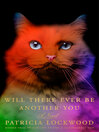
Review by Publisher's Weekly Review
Lockwood (No One Is Talking About This) portrays the lingering effects of Covid-19 on a successful author's body and mind in this scintillating narrative. After contracting the virus, the unnamed narrator suffers for many months from an array of debilitating neurological symptoms, including short-term memory loss. In an effort to regain her sense of self and return to writing, she attempts "to rewire my brain with mushrooms," but succeeds "mainly in becoming temporarily psychic and reading Anna Karenina so hard I almost died." Vignettes about life during the pandemic touch on the narrator's family, her marriage, and the workaday realities of her profession--interviews, TV adaptations, and conferences where she feels out of place ("If all else failed," she tells herself, "I could say things about Virginia Woolf's heart problems"). Just as she seems to be recovering, her husband falls sick and must undergo several critical surgeries, reversing the roles of caregiver and patient. The narration oscillates between first and third person: "Some mornings she seemed true, and then she was I; some mornings she seemed false, and then she was she." What remains consistent is Lockwood's lyricism, as she renders her protagonist's attempt to form meaning from a profoundly difficult ordeal: "The soul is a floor. It is there to bear us up and keep us standing, not merely to be clean." The author's fans will find her trademark humor, originality, and depth on full display. This is a knockout. Agent: Mollie Glick, CAA. (Sept.)
(c) Copyright PWxyz, LLC. All rights reserved
Review by Kirkus Book Review
In the wake of a disorienting illness, a woman attempts to write "a masterpiece about being confused." What on earth is happening to the unnamed protagonist of this novel? She suffers from "bizarre nonsense dreams," feels there is "a secret number between two and three," and sees "a zigzag" in the corner of her eye that she refers to as "the angel." Has an unnamed illness "stolen her old mind and given her a new one?" We're told she "first got sick" in March 2020, and because the details of the protagonist's life and work track so closely with the author's, we assume it is Covid-19, which left Lockwood in a post-Covid fog, described in an essay for theLondon Review of Books. This is no straightforward illness diary, but a "mad notebook" capturing the sensory experience and psychic state of a character in extremis. It opens with a family trip to Scotland, seemingly before the pandemic--but never mind, linearity and narrative are beside the point. In Scotland, the protagonist suddenly believes in fairies; throughout the book she is obsessed with changelings, doppelgängers, knockoff Cabbage Patch Kids, cloned sheep,Mrs. Doubtfire, a potential TV adaptation of her memoir,Priestdaddy, and all manner of facsimiles that point toward the existential question of the title. Somewhat incidentally, she reads and feverishly analyzesAnna Karenina, tries her hand at metalworking, and, after her husband undergoes emergency surgery that leaves him with 36 staples in the abdomen, finds herself "in charge of the Wound." Wherever this phantasmagoric book takes us, it is shot through with a poet's love for the slippery absurdities of language and abundant laugh-out-loud gags. Can we hope for a one-woman show? There is only one Patricia Lockwood, and this surreal, silly, and sneakily profound book could only be hers. Copyright (c) Kirkus Reviews, used with permission.
Copyright (c) Kirkus Reviews, used with permission.