Review by Publisher's Weekly Review
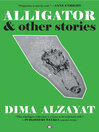
Ryan (Animals in Motion) explores the boundary between dreams and reality in this approachable and surprisingly moving collection. In the title entry, the unnamed narrator's life flashes before his eyes. He remembers a cartoon alligator on the shirt his estranged son wore as a toddler years earlier, on which a smear of red jelly looked to him like blood. Then, in a daze, he falls down the stairs and lies at the bottom, remembering other alligators, such as a real-life one who watched him from across the water on a bayou, causing him to muse on their connection ("Maybe the alligator saw itself on a lawn someday crawling up to a front door, shot through time. And maybe this is how we might believe in God"). In "Apiary," new parents Julia and Doug visit Julia's family at their home in rural Michigan, where bees have taken over the barn. The couple decide to leave early, and in a surreal turn, the barn collapses as they drive away. "Sleepwalker" centers on a young boy who follows his sleepwalking mother each night on the streets of their Indiana town. One night, he realizes she's leading him to the place where his father died in a car accident. Throughout, Ryan's offhand style gives way to startling epiphanies. This one leaves a mark. (Nov.)
(c) Copyright PWxyz, LLC. All rights reserved
Review by Kirkus Book Review
A collection of stories that reflect the precision and balance of a high-wire aerialist. As with the high wire, these stories require close attention; they should be read slowly and carefully. They seem to have been written that way, every step deft and deliberate. Take the opening title story. Its narrator is "I," and he's addressing "you" about their young son. The first reference to the titular alligator is the cartoon on the young boy's shirt. Yet the alligator will reappear in various manifestations, and so will "I." He says he's telling "a story forming the sum of my life," before quickly shifting and pivoting: "No. This never happened; it's the wrong alligator. The wrong child, the wrong life. Sometimes I lie to myself because it's the only clarity I seem to have when confronted by some terror no method of thinking can fathom. Lying meaningfully to answer certain sublime questions. Where themeaningfully is the new truth. A story." So, these are stories about the essence, process, and value of storytelling. But they are also about those terrors--families falling apart, identities crumbling, tornadoes and earthquakes and industrial contamination wreaking havoc. Several stories include "David," but there's no evidence that these are more (or less) autofictional than the others. Life can change in an instant, with cause-and-effect consequences that might reverberate for decades. Particularly virtuosic is the dream-within-dream sequence of "Reliquary," one of many stories of a young boy left with a single parent: "That night I dream that I am my mother dreaming about my father. I'm witnessing this but I am inside the dream, too. In it, he's died and we're watching him on the pallet pulled from the mudslide. It's a vague memory, really. A bright red thread weaving through space between the real moment and the dream of the moment, which is itself no less real." There's a liminal realm in these stories between life and death, present and past, dream and memory, fate and chance. Copyright (c) Kirkus Reviews, used with permission.
Copyright (c) Kirkus Reviews, used with permission.