Review by Publisher's Weekly Review
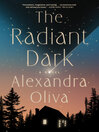
Oliva (Forget Me Not) blends a quiet family drama with a spellbinding saga of extraterrestrial contact in her alluring latest. Growing up poor in the Adirondacks, Carol Girard hoped for a better life. Instead, she settled down with a dependable but emotionally cold husband in their hometown. After giving birth to their first child, Michael, four weeks early in 1980, Carol experiences debilitating postpartum depression, exhaustion, and feelings of inadequacy. A few weeks later, flashes of light and a radio signal in the sky emanating from the constellation Virgo lead scientists to theorize that aliens from the star Ross 128, 11 light years away, are communicating with Earth. Carol, born under the zodiac sign Virgo, feels connected to the aliens, which humans call Rossians. Two years later, Earth sends a reply, beaming out a picture of the solar system. Over the course of decades, the narrative tracks how Carol's daughter, Ro, becomes an astrophysicist to decipher a message sent by the Rossians in 2005. The extended depiction of Carol's frustrated life doesn't quite gel with the alien story line, but the novel picks up speed with Ro on the case, and Oliva imbues the story with a genuine sense of hope that intelligent life exists elsewhere in the universe. This will fascinate readers. Agent: Lucy Carson, Friedrich Agency. (Apr.)
(c) Copyright PWxyz, LLC. All rights reserved
Review by Kirkus Book Review
When extraterrestrials make contact with Earth on Feb. 3, 1980, an American family drama begins. Carol Girard is a frustrated new mother: resentful of her husband, Jake; disappointed by her inability to bond with baby Michael; feeling trapped in a rickety house in upstate New York. Her mood is improved when signals begin appearing in the night sky, soon traced back to Ross 128 b, a planet 11 light years away. The signals are decoded via mathematics: traveling on light waves, these communications confirm intelligent life. President Jimmy Carter wins a second term as Earth becomes more united, with a worldwide effort to send a message back. The novel unspools the story of the Girard family, but the backdrop is an alternate timeline beginning in 1980: The world order changes, slang is different, tech is better, and so are the dreams of children like Michael and his little sister, Rosanna, who becomes the novel's center as a leading scientist in this world where a populated universe is a reality. Back in small-town New York, Carol makes a permanent departure from her family and becomes a member of the Universalists, a religious cult grown from contact with Ross 128 b. Decades, and then more than a century, pass in the Girard family, which experiences tragedy and triumph; the story is perceptively told, particularly in the visceral portrayal of the damaged mother-daughter relationship. The novel's duality in scope is fascinating; within the intimate family story, characters discuss humanity's place in the universe, its insignificance in the scope of space and time. And though the human history of the Girards is small in the scheme of things, it is told beautifully, in emotionally complex and heartfelt storytelling. A dollop of SF enlivens this thought-provoking family saga. Copyright (c) Kirkus Reviews, used with permission.
Copyright (c) Kirkus Reviews, used with permission.